
This website is intended for use by US residents only.

A calendar with the date marked every once a week

How CRYSVITA is dosed in adults with XLH

Starting CRYSVITA

You will receive 1 dose every 4 weeks. The starting dose (the amount of CRYSVITA you receive) is based on body weight and will be determined by your doctor. In some cases, more than 1 injection may be required.

While taking CRYSVITA

Your doctor will check your phosphorus levels 2 weeks after you start CRYSVITA, then each month for the first 3 months, and as needed after that. They may adjust your dosage (the amount and how often you receive CRYSVITA) if your phosphorus levels are not in the normal range.

Before starting CRYSVITA

Before you start CRYSVITA, your doctor will review your current medications and check a few things to make sure treatment is appropriate:

  • Stop taking oral phosphate and/or active vitamin D analogs (such as calcitriol, paricalcitol, doxercalciferol, or calcifediol) 1 week before starting CRYSVITA
  • Your phosphorus levels should be below the appropriate range for your age
  • Calcium and parathyroid hormone levels may be checked, especially if you are at risk for high calcium levels
A syringe

What to do if you miss a CRYSVITA dose

If you miss a dose, be sure to receive your next CRYSVITA dose as soon as possible.

To avoid missed doses, CRYSVITA may be administered up to 3 days before or after the scheduled treatment date.

How CRYSVITA is given

CRYSVITA is given as an injection by a healthcare provider.

This type of injection is called a subcutaneous injection, which means it is given by a needle into the tissue just below the skin. The needle should not touch your nerves, muscles, or bones.

You will get your injection in 1 of 4 places. Each time, the injection spot will be switched to a different one.
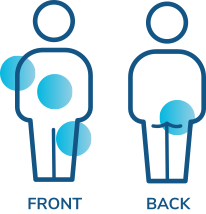

  • Upper arms
  • Upper thighs
  • Buttocks
  • Stomach
A silhouette of a person in the front and back, indicating areas of the body for injection

Prescribed CRYSVITA for XLH? Kyowa Kirin Cares can support your treatment journey

A woman smiling at her desk with a headset on

Actor portrayal

Aly, a person living with XLH, smiling

Aly, started on CRYSVITA in 2018

Real XLH stories

You’re not alone on this CRYSVITA treatment journey

Hear real experiences of living with XLH and treating it with CRYSVITA from other adults.

Indication
What is CRYSVITA?

CRYSVITA is a prescription medicine used to treat adults and children 6 months of age and older with X-linked hypophosphatemia (XLH).


What is CRYSVITA?

CRYSVITA is a prescription medicine used to treat adults and children 6 months of age and older with X-linked hypophosphatemia (XLH).

Important Safety Information

You should not take CRYSVITA if:

  • You take an oral phosphate supplement and/or a specific form of vitamin D supplement (such as calcitriol, paricalcitol, doxercalciferol, calcifediol).
  • Your phosphorus levels from a blood sample are within or above the normal range for age.
  • You have kidney problems.

What is the most important information you should know about CRYSVITA?

  • Some patients developed allergic reactions (e.g., rash and hives) while taking CRYSVITA. Your doctor will monitor you for symptoms of an allergic reaction while you are taking CRYSVITA. Your treatment may need to be discontinued for serious allergic reactions.
  • High levels of phosphorus in the blood have been reported in some patients taking CRYSVITA. This may be related to a risk of high calcium levels in the kidneys. Your doctor will collect blood samples to monitor your levels. If you are already taking CRYSVITA, dose interruption and/or dose reduction may be required based on your serum phosphorus levels.
  • High levels of calcium in the blood have been reported in patients taking CRYSVITA. The risk is greater in patients with pre-existing hyperparathyroidism (overactive parathyroid glands), for those who are unable to move for extended periods of time, become dehydrated, have high vitamin D levels, or have kidney issues. If you are at greater risk, your doctor will monitor your blood calcium and parathyroid hormone levels before you start and while taking CRYSVITA. If you develop high levels of blood calcium, your doctor may need to stop your treatment until it is adequately managed.
  • Administration of CRYSVITA may result in reactions at the injection site, such as hives, reddening of the skin, rash, swelling, bruising, pain, severe itching of the skin, and collection of blood outside of a blood vessel (i.e., hematoma). Call your doctor if you develop an injection site reaction. CRYSVITA may be discontinued if severe injection site reactions occur.

What are the possible side effects of CRYSVITA?

  • Adverse reactions that were seen in children with XLH are:
  • Fever
  • Injection site reaction
  • Cough
  • Vomiting
  • Pain in arms and legs
  • Headache
  • Tooth abscess
  • Dental cavities
  • Diarrhea
  • Decreased vitamin D levels
  • Toothache
  • Constipation
  • Muscle pain
  • Rash
  • Dizziness
  • Nausea
  • Adverse reactions that were seen in adults with XLH are:
  • Back pain
  • Headache
  • Tooth infection
  • Restless legs syndrome
  • Decreased vitamin D levels
  • Dizziness
  • Constipation
  • Muscle spasms
  • Phosphorus levels increased in the blood
  • Narrowing of the spaces within the spine is common in adults with XLH, and pressure on the spinal cord has been reported in adults taking CRYSVITA. It is not known if taking CRYSVITA worsens the narrowing of the spaces within the spine or the pressure on the spinal cord.

Before taking CRYSVITA, tell your doctor about all of your medications (including supplements) and medical conditions, including if you:

  • Are taking oral phosphate and/or active vitamin D (such as calcitriol, paricalcitol, doxercalciferol, calcifediol).
  • Are pregnant, think you may be pregnant, or plan to become pregnant. There is not enough experience to know if CRYSVITA may harm your unborn baby. Report pregnancies to the Kyowa Kirin, Inc. Adverse Event reporting line at 1-844-768-3544.
  • Are breastfeeding or plan to breastfeed. There is not enough experience to know if CRYSVITA passes into your breast milk. Talk with your doctor about the best way to feed your baby while you receive CRYSVITA.

While taking CRYSVITA, tell your doctor if you experience:

  • An allergic reaction such as rash or hives
  • A rash, swelling, bruising, or other reaction at the injection site
  • New or worsening restless legs syndrome

These are not all the possible side effects of CRYSVITA. Call your doctor for medical advice about side effects.

You may report side effects to the FDA at (800) FDA-1088 or www.fda.gov/medwatch. You may also report side effects to Kyowa Kirin, Inc. at 1-844-768-3544.

For important risk and use information, please see the full Prescribing Information for CRYSVITA.

What is CRYSVITA?

CRYSVITA is a prescription medicine used to treat adults and children 6 months of age and older with X-linked hypophosphatemia (XLH).

Important Safety Information

You should not take CRYSVITA if:

  • You take an oral phosphate supplement and/or a specific form of vitamin D supplement (such as calcitriol, paricalcitol, doxercalciferol, calcifediol).
  • Your phosphorus levels from a blood sample are within or above the normal range for age.
  • You have kidney problems.

What is the most important information you should know about CRYSVITA?

  • Some patients developed allergic reactions (e.g., rash and hives) while taking CRYSVITA. Your doctor will monitor you for symptoms of an allergic reaction while you are taking CRYSVITA. Your treatment may need to be discontinued for serious allergic reactions.
  • High levels of phosphorus in the blood have been reported in some patients taking CRYSVITA. This may be related to a risk of high calcium levels in the kidneys. Your doctor will collect blood samples to monitor your levels. If you are already taking CRYSVITA, dose interruption and/or dose reduction may be required based on your serum phosphorus levels.
  • High levels of calcium in the blood have been reported in patients taking CRYSVITA. The risk is greater in patients with pre-existing hyperparathyroidism (overactive parathyroid glands), for those who are unable to move for extended periods of time, become dehydrated, have high vitamin D levels, or have kidney issues. If you are at greater risk, your doctor will monitor your blood calcium and parathyroid hormone levels before you start and while taking CRYSVITA. If you develop high levels of blood calcium, your doctor may need to stop your treatment until it is adequately managed.
  • Administration of CRYSVITA may result in reactions at the injection site, such as hives, reddening of the skin, rash, swelling, bruising, pain, severe itching of the skin, and collection of blood outside of a blood vessel (i.e., hematoma). Call your doctor if you develop an injection site reaction. CRYSVITA may be discontinued if severe injection site reactions occur.

What are the possible side effects of CRYSVITA?

  • Adverse reactions that were seen in children with XLH are:
  • Fever
  • Injection site reaction
  • Cough
  • Vomiting
  • Pain in arms and legs
  • Headache
  • Tooth abscess
  • Dental cavities
  • Diarrhea
  • Decreased vitamin D levels
  • Toothache
  • Constipation
  • Muscle pain
  • Rash
  • Dizziness
  • Nausea
  • Adverse reactions that were seen in adults with XLH are:
  • Back pain
  • Headache
  • Tooth infection
  • Restless legs syndrome
  • Decreased vitamin D levels
  • Dizziness
  • Constipation
  • Muscle spasms
  • Phosphorus levels increased in the blood
  • Narrowing of the spaces within the spine is common in adults with XLH, and pressure on the spinal cord has been reported in adults taking CRYSVITA. It is not known if taking CRYSVITA worsens the narrowing of the spaces within the spine or the pressure on the spinal cord.

Before taking CRYSVITA, tell your doctor about all of your medications (including supplements) and medical conditions, including if you:

  • Are taking oral phosphate and/or active vitamin D (such as calcitriol, paricalcitol, doxercalciferol, calcifediol).
  • Are pregnant, think you may be pregnant, or plan to become pregnant. There is not enough experience to know if CRYSVITA may harm your unborn baby. Report pregnancies to the Kyowa Kirin, Inc. Adverse Event reporting line at 1-844-768-3544.
  • Are breastfeeding or plan to breastfeed. There is not enough experience to know if CRYSVITA passes into your breast milk. Talk with your doctor about the best way to feed your baby while you receive CRYSVITA.

While taking CRYSVITA, tell your doctor if you experience:

  • An allergic reaction such as rash or hives
  • A rash, swelling, bruising, or other reaction at the injection site
  • New or worsening restless legs syndrome

These are not all the possible side effects of CRYSVITA. Call your doctor for medical advice about side effects.

You may report side effects to the FDA at (800) FDA-1088 or www.fda.gov/medwatch. You may also report side effects to Kyowa Kirin, Inc. at 1-844-768-3544.

For important risk and use information, please see the full Prescribing Information for CRYSVITA.

Go to top button

Back to top

COMM-US-CRY-0928 June 2026